Skin Disease Detection Platform
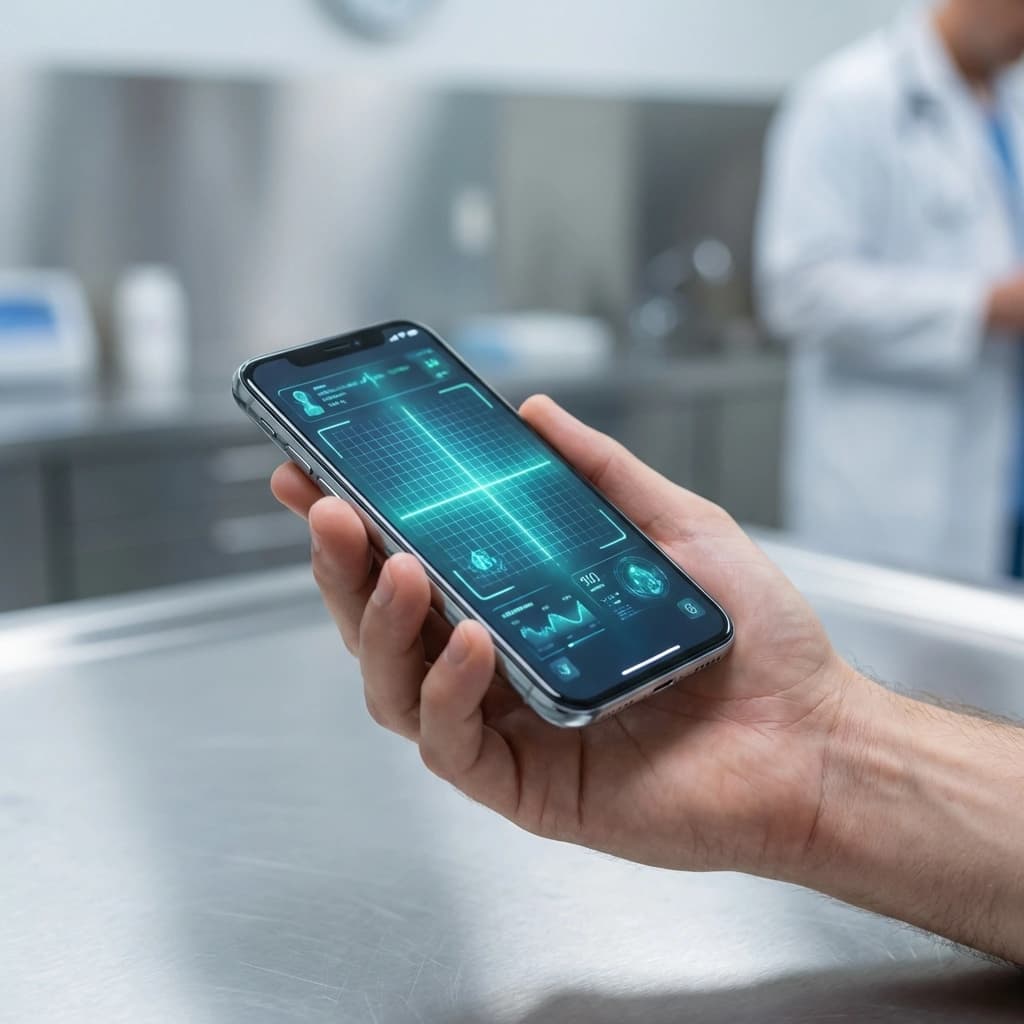
A dermatological clinic network operating across six countries in Central Asia needed to make dermatological care more accessible and improve health outcomes through early detection of skin conditions. The client required an AI-powered mobile application that could provide instant preliminary assessments of various skin conditions by analysing photos taken with mobile cameras. The solution needed to achieve high diagnostic accuracy whilst managing infrastructure costs and ensuring sufficient high-quality training data. The app had to be user-friendly, accessible across iOS and Android platforms, and include features to guide users on capturing quality images whilst providing transparent explanations for AI-generated assessments.
A leading dermatological healthcare provider operating across Central Asia, serving thousands of patients daily with cutting-edge medical services and maintaining exceptional customer satisfaction scores.
•Operates a network of dermatological clinics across six countries in Central Asia
•Serves over 1,000 patients daily
•Provides medical and healthcare services for more than 10 years
•Maintains a high Net Promoter Score (NPS) of over 9, indicating strong customer satisfaction
•Client base exceeding 5,000 individuals
•Offers 11 unique dermatological services
•12% of clients are High-Net-Worth Individuals
AI-powered mobile app
Allows patients to capture and submit images of their skin conditions for preliminary assessment. The app leverages deep learning and image recognition techniques, including CNNs and transfer learning. It provides users with instant preliminary assessments and promotes early detection of skin conditions.
Skin disease classification module
Employs a custom-modified DINOv2 model, achieving an average accuracy of 80% across 30 skin condition classes.
Image quality and explainability layers
Includes features to assess image quality and guide users on capturing better images. Provides explanations for the AI's analysis to build trust and transparency.
Scalable infrastructure
Utilises AWS cloud services, including AWS Batch and NVIDIA Triton Inference Servers, to ensure high scalability and availability. Model optimisation ensures a seamless user experience.
Human-in-the-loop annotation
Implemented a robust annotation process, incorporating expert dermatologists to ensure high-quality training data. Used baseline models and offline processing to accelerate the annotation workflow.
Web-based admin panel
Provides administrators with tools to manage diagnoses, configure treatments and medications by country, review AI-generated assessments, analyse app usage, and generate reports.
1
Achieve target accuracy (80%)
Balancing the client's desire for high diagnostic accuracy (initially >90%) with the limitations of current ML models, especially given variable photo quality.
2
Manage infrastructure costs
Containing the costs of developing and deploying a robust ML model training and inference infrastructure.
3
Data acquisition and quality
Ensuring a sufficient volume of high-quality images for training and validating the ML model.
Computer
vision model with over 80% top-1 accuracy across 30 dermatological diagnoses, with potential for future improvement and expansion
Cross-platform
mobile application launched on both iOS and Android platforms, making it accessible to a wide audience
Web-based
admin panel delivered for managing the solution and analysing data
We developed an AI-powered mobile application for early detection of skin diseases including melanoma, eczema, and acne. The app utilises image recognition and deep learning algorithms based on Convolutional Neural Networks (CNNs) and Transfer Learning. By analysing photos taken with mobile cameras, it provides users with instant preliminary assessments of various skin conditions, making dermatological care more accessible, improving health outcomes, and raising awareness about the importance of early detection. The solution employs a custom-modified DINOv2 model, achieving an average accuracy of 80% across 30 skin condition classes. We implemented image quality assessment features to guide users on capturing better images and provided explanations for the AI's analysis to build trust and transparency. The scalable infrastructure utilises AWS cloud services, including AWS Batch and NVIDIA Triton Inference Servers, ensuring high scalability and availability whilst optimising models for seamless user experience. We incorporated a human-in-the-loop annotation process with expert dermatologists to ensure high-quality training data, using baseline models and offline processing to accelerate the workflow. The web-based admin panel provides administrators with comprehensive tools to manage diagnoses, configure treatments and medications by country, review AI-generated assessments, analyse app usage, and generate reports.
•Molluscum contagiosum
•Urticaria
•Vitiligo
•Dry Skin and Xerosis Cutis
•Eczema and Dyshidrotic Eczema
•Fibroma and Skin Tag
•Corns and Callus and Wart (Verruca)
•Nevus M
•Nevus N M
•Acne E
•Acne M
•Acne H
•Seborrheic Keratosis
•Solar Lentigo
•Herpes
•Impetigo
•Allergic Dermatitis
•Contact Dermatitis
•Perioral Dermatitis
•Rosacea Pityriasis Versicolor
•Pityriasis Rosea Gibert
•Mycosis Psoriasis
•Onychodystrophy
•Atopic Dermatitis
•Eczema
•Gilberts Pityriasis Rosea
•Scabies
PythonOpenCVNumPyAWS (EC2, S3, Lambda, SageMaker)REST APIGitHub