Intelligent SCADA Digital Twin & Grid Simulation
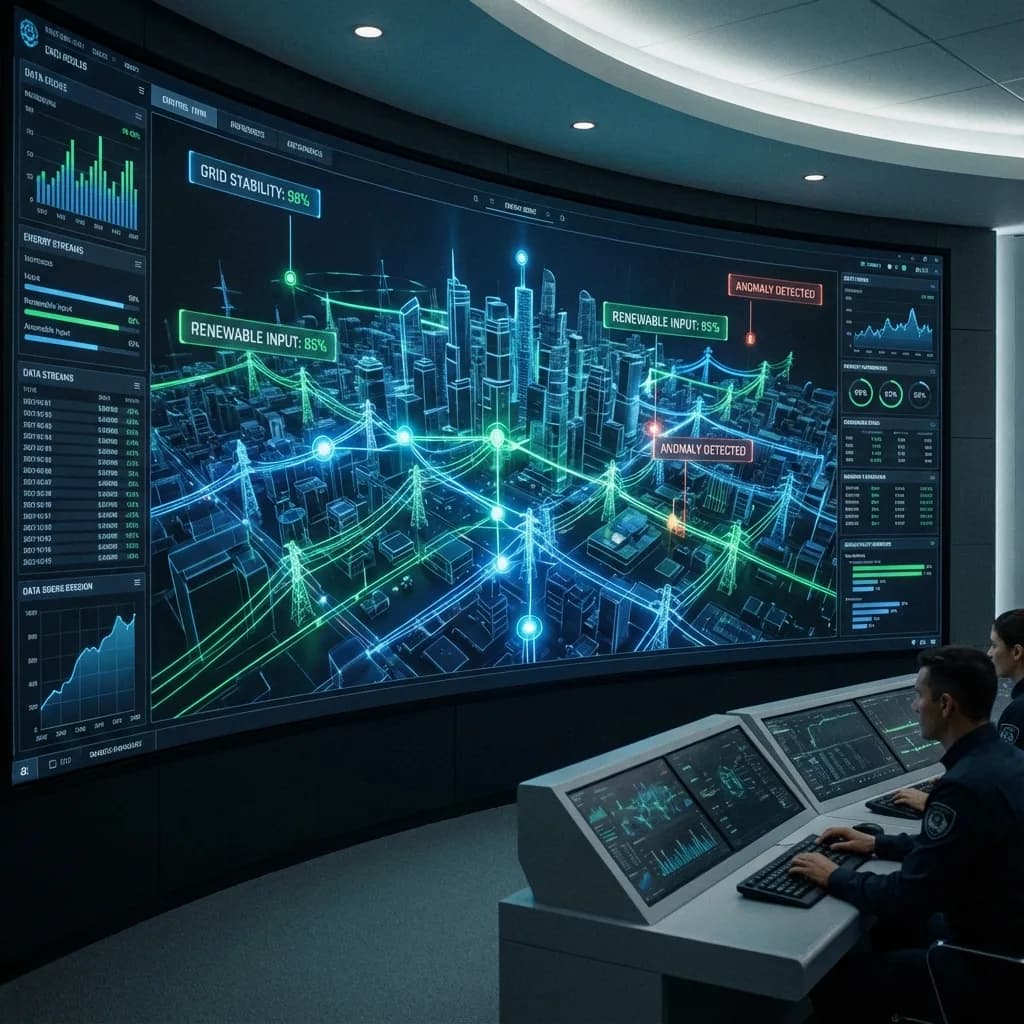
The energy company was using an old SCADA system that could only react to problems after they happened. It worked reliably but wasn't built for modern needs. The interface was outdated, adding new features was slow, and maintenance took too much time and money.
A forward-thinking energy company managing a complex regional power grid. They relied on an outdated SCADA system that was purely reactive, difficult to maintain, and lacked modern predictive capabilities.
•Responsible for critical grid infrastructure
•Reliance on legacy, reactive systems
•Need for real-time predictive capabilities
•Goal to modernize grid operations
Unified Grid Monitoring
A centralized dashboard visualizing real-time data from across the network, allowing operators to detect anomalies instantly.
Predictive Forecasting
AI models that analyze historical and live data to forecast demand, balance loads, and stabilize voltage before issues occur.
Emergency Simulator
A 'flight simulator' for the grid that lets teams practice responding to outages, extreme weather, and equipment failures safely.
1
Legacy Rigidity
The old system was brittle; adding new features took months. The new architecture had to be modular and scalable.
2
Real-Time Latency
Processing massive streams of sensor data with near-zero latency for accurate control required a high-performance backend.
3
Operational Continuity
Migrating from a live legacy system to the new digital twin without interrupting power delivery.
Shift
from reactive to predictive grid control
Greater
resilience via emergency training simulations
Future-ready,
modular system architecture
Improved
coordination during critical incidents
We built an Intelligent SCADA Twin - a next-generation control system that combines live monitoring, smart forecasting, and a built-in simulator. It predicts how the grid will behave, alerts operators proactively, and allows teams to train for emergencies without risk.
JavaPythonTypeScriptKubernetesKafkaPostgreSQL